
The department follows the curriculum prescribed by the University of North Bengal under the Four-Year Undergraduate Programme (FYUGP) in alignment with NEP 2020.
The curriculum structure includes:
⮚ Core (Major) Courses
⮚ Minor Courses
⮚ Multidisciplinary Courses
⮚ Skill Enhancement Courses (SEC)
⮚ Ability Enhancement Courses (AEC)
⮚ Value Added Courses (VAC)
⮚ Research/Project Components
The syllabus integrates theoretical foundations with practical exposure in areas such as:
Educational Philosophy, Educational Sociology, Educational Psychology, Guidance & Counseling, Educational Statistics, ICT in Education, and Inclusive Education etc.
The Department follows an Outcome-Based Education (OBE) approach with clearly defined Programme Outcomes (POs) and Course Outcomes (COs) for each course. COs are systematically mapped with POs, and learning attainment is regularly monitored through continuous evaluation.
The framework emphasizes the development of critical thinking, research aptitude, pedagogical competence, social responsibility, and mental well-being awareness.
Teaching–Learning Methodology:
The department uses a blended and student-centric approach:
⮚ Lectures & Interactive Discussions
⮚ ICT-enabled teaching
⮚ PowerPoint presentations
⮚ Group discussions
⮚ Project-based learning
⮚ Academic mentoring
⮚ Remedial classes
Special emphasis is given to experiential learning and participatory pedagogy.
The department follows Continuous Internal Evaluation (CIE) and Semester-End Examination system:
Internal Assessment Components:
⮚ Class tests
⮚ Assignments
⮚ Attendance
External Assessment:
⮚ University semester examinations
Feedback from students is collected regularly to improve teaching quality.
The Department of Education promotes holistic development through structured academic, co-curricular, and extension activities beyond regular classroom teaching. Key initiatives include experiential learning (field visits, institutional visits, projects, and case studies), academic enrichment programmes (seminars, workshops, invited lectures, and student presentations), skill development activities (communication, life skills, ICT, and career guidance), and community engagement programmes (awareness drives, outreach activities, and observance of significant days).
These initiatives foster leadership, social responsibility, research aptitude, teamwork, and ethical values among students.
Research and Innovation Initiatives:
The Department of Education focuses on research in Educational Technology and ICT, AI in Education, Inclusive Education, Guidance and Counselling, Mental Health, Teacher Education, and Curriculum & Assessment Studies. The department promotes faculty publications, student research projects, and community-based studies addressing contemporary educational challenges and societal needs.
Future Plans:
The Department of Education aims to strengthen its academic and research ecosystem by promoting funded research projects, quality publications, and the organization of seminars and workshops. The department plans to introduce value-added courses in ICT, Inclusive Education, and Guidance & Counselling, enhance ICT-enabled and blended learning practices, and establish collaborations with schools and other educational institutions. Emphasis will also be placed on student research, internships, faculty development programmes, and the development of a departmental research and resource centre.
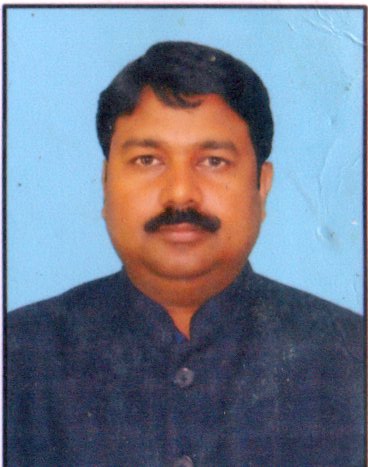
Dr. Amal Kr. Sarkar (HOD)
Department of Education
University B.T. & Evening College, Cooch Behar